

Are you facing the intricate challenge of designing die-casting molds for New Energy Vehicle (NEV) motor housings, a component critical for EV performance and reliability? Improper mold design can compromise everything from thermal management to structural integrity.
Designing die-casting molds for New Energy Vehicle motor housings requires a holistic approach that integrates advanced DFM analysis, comprehensive mold flow simulation, meticulous metallurgical understanding, and precise thermal and structural engineering to produce lightweight, high-strength, and thermally efficient components crucial for EV performance.
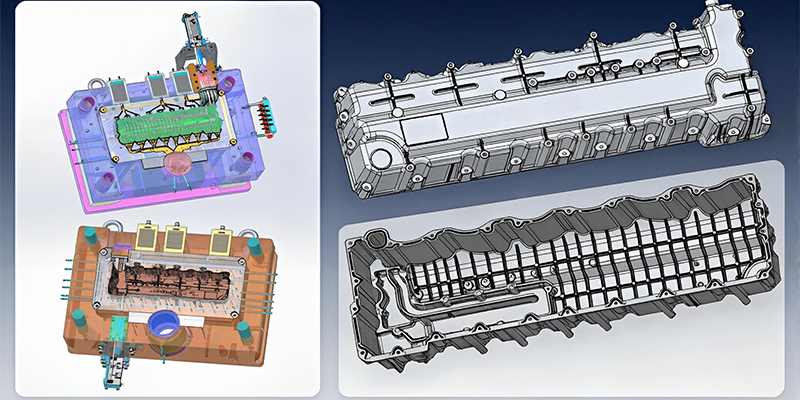
In my two decades of experience in aluminum alloy die casting, I’ve had the privilege of contributing to the evolution of critical automotive components, with a particular focus on the demanding New Energy Vehicle sector. Designing a die-casting mold for an NEV motor housing is not just about translating a part drawing into a tool. It’s about orchestrating a complex interplay of physics, metallurgy, and engineering precision. I recall an early project for a major European Tier 1 supplier, where their initial motor housing design integrated both the inverter and the motor within a single casting, requiring extreme airtightness, complex internal cooling passages, and very tight dimensional tolerances. The mold design was exceptionally challenging. My team and I spent weeks performing extensive mold flow simulations and structural analyses, iterating on gate locations, runner designs, and even the internal cooling channels within the mold itself. The outcome was a robust, efficient mold that successfully produced a complex, high-performance housing. This experience highlighted the absolute necessity of a systematic and deeply technical approach to mold design for NEV motor housings.
What are the key challenges in NEV motor housing die-casting mold design?
Are you aware of the specific complexities that make designing die-casting molds for NEV motor housings significantly more challenging than conventional components? Overlooking these can lead to compromised quality, production inefficiencies, and costly redesigns.
Key challenges in NEV motor housing die-casting mold design include managing complex geometries with thin walls, achieving superior thermal management features, ensuring high airtightness, addressing material and process limitations, and delivering high production volume with consistent quality and dimensional accuracy.
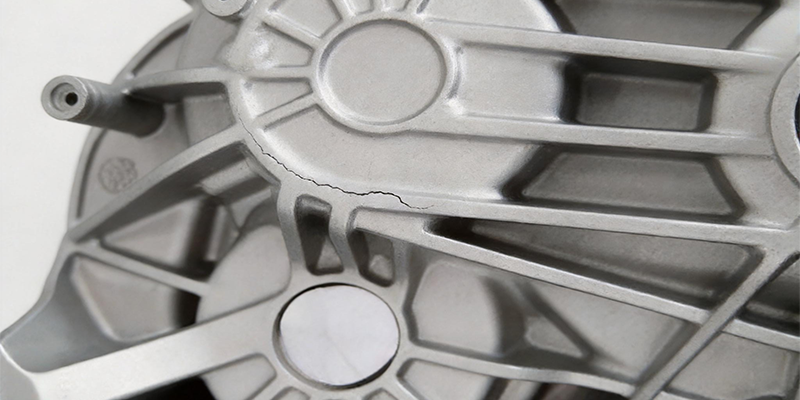
Designing a mold for an NEV motor housing is a multi-faceted engineering challenge that demands a deep understanding of both the casting process and the end-use application. Each requirement of the motor housing translates into a specific challenge in the mold design.
Key Challenges in NEV Motor Housing Die-Casting Mold Design
| Challenge Area | Detailed Description of the Challenge | Potential Consequences if Not Addressed in Mold Design |
|---|---|---|
| Complex Geometries & Thin Walls | NEV motor housings often feature highly complex internal and external geometries, including integrated cooling fins, mounting points for electronics, precisely spaced internal chambers for stator/rotor assembly, and minimal wall thicknesses for lightweighting. Casting these intricate details reliably without defects is demanding. | Incomplete Fill (Misruns/Cold Shuts): Molten metal doesn’t reach thin sections or complex features, leading to scrapped parts. Porosity: Trapped air or gas, especially in critical areas, compromises strength and airtightness. Warpage/Dimensional Instability: Inconsistent solidification leads to parts that don’t meet tight tolerances. |
| Demands for Superior Thermal Management | Motor housings function as crucial heat exchangers for the electric motor. The mold must facilitate casting integrated features like intricate cooling channels, heat sinks, and flow guides. Ensuring uniform heat transfer from the casting and preventing thermal stresses within the mold itself is complex. | Reduced Motor Performance & Lifespan: Inefficient heat dissipation from the motor housing impacts the motor’s operating temperature, leading to reduced efficiency, power output, and premature failure of motor components (e.g., demagnetization, winding degradation). Thermal Fatigue of Mold: Shortened mold life due to high localized thermal stress. |
| High Airtightness Requirements | Many NEV motor housings integrate fluid channels (e.g., for oil cooling) or sensitive electronics that require protection from environmental contaminants. This necessitates castings with extremely low porosity, especially through critical sealing surfaces and pressure-bearing walls. | Leakage: Fluid leaks (oil/coolant) lead to system failure, safety hazards, and environmental contamination. Component Failure/Short Circuits: Ingress of moisture or contaminants into electronic sections causes malfunction or catastrophic failure. Increased Scrap Rate: Failure to pass pressure tests leads to high scrap. |
| Material/Process Limitations | The high injection pressures and rapid cooling rates of HPDC can present challenges for certain part features. Aluminum alloys can exhibit hot tearing in areas of restricted shrinkage. The need for primary alloy (virgin or low-recycled content) often means strict control over alloy composition and melt quality to achieve desired properties. | Casting Defects: Hot tearing, excessive shrinkage marks, or internal stress. Suboptimal Mechanical Properties: Reduced strength or ductility if the casting process isn’t optimized for the chosen alloy. Increased Tooling Wear: Abrasive flow or thermal shock on the mold can reduce its lifespan. |
| Dimensional Accuracy & Repeatability | NEV motor housings interface with numerous other precision components (stator, rotor, bearings, seals, mounting brackets). The mold must consistently produce parts with extremely tight dimensional tolerances and repeatable geometry over high production volumes to ensure proper fit, assembly, and operation. | Assembly Issues: Parts that don’t fit correctly, requiring costly rework or adjustment on the assembly line. Reduced Performance: Misaligned components can lead to increased friction, vibration, or reduced efficiency. High Rejection Rates: Inability to meet tolerance consistently leads to high scrap and inspection costs. |
| Integrated Functionality & Part Consolidation | Modern NEV housings aim to consolidate multiple functions into a single casting (e.g., motor housing + inverter housing, or housing with integrated pump components). This dramatically increases the complexity of the mold, requiring intricate core pulls, slides, and precise feature integration while maintaining structural integrity and material flow. | Mold Complexity & Cost: Higher design and manufacturing costs for the mold itself. Design Compromises: If integration is not properly managed, it can compromise the performance of individual functions, or lead to areas that are difficult to fill or eject without damage. Increased Risk of Defects: More complex molds have a higher potential for unforeseen casting issues. |
What are the essential design techniques for high-pressure die casting motor housings?
Are you searching for the proven techniques and strategies that underpin successful high-pressure die casting mold design for NEV motor housings? Knowing these methods is paramount to achieving optimal component quality and production efficiency.
Essential design techniques for high-pressure die casting motor housings encompass advanced DFM analysis, comprehensive mold flow simulation to optimize gate/runner systems and cooling, precise thermal management of the mold, robust structural mold design, and sophisticated venting and vacuum assist strategies to ensure defect-free, high-performance parts.
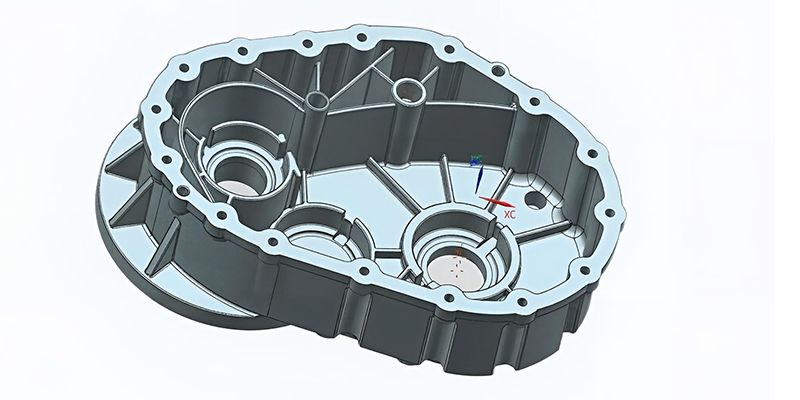
Based on my extensive experience, successfully designing HPDC molds for NEV motor housings requires a systematic and highly technical approach. It’s a dance between the part’s requirements, the material properties, and the capabilities of the casting process.
Essential Design Techniques for High-Pressure Die Casting Motor Housings
| Design Technique | Detailed Explanation and Implementation Strategies | How This Ensures High-Performance NEV Motor Housings |
|---|---|---|
| Design for Manufacturability (DFM) & Early Collaboration | Initiate DFM analysis early in the product design phase, bringing together product designers, metallurgists, and mold engineers. Focus on simplifying geometries where possible, optimizing draft angles, ensuring uniform wall thicknesses, and identifying features critical for casting. | Leads to a more manufacturable part with fewer defects. Early collaboration prevents costly redesigns and ensures the motor housing design inherently supports HPDC capabilities, such as thin walls, integrated cooling, and ease of ejection, contributing to lightweighting and thermal efficiency. |
| Advanced Mold Flow Simulation | Utilize sophisticated software (e.g., Magmasoft, Flow-3D) to simulate the entire casting process. This includes optimizing gate and runner systems (e.g., multi-gate, fan gates), predicting fill patterns, solidification behavior, potential shrinkage, porosity locations, and thermal distribution within the casting and mold. | This is our virtual proving ground. Simulations allow us to fine-tune metal delivery, minimize turbulence, prevent cold shuts in thin-walled sections, and precisely control solidification, ensuring maximum density and minimal internal defects. This directly impacts the motor housing’s structural integrity, airtightness, and thermal performance. |
| Optimized Gating and Runner System Design | Design the runner system to provide an even, high-velocity flow of molten aluminum to all gates while minimizing temperature loss and turbulence. Gate placement, size, and shape are optimized based on mold flow simulation to ensure complete and balanced filling, efficient feeding of solidifying areas, and easy gate shear after casting. | A well-designed gating and runner system ensures complete filling of complex motor housing features, reduces porosity, and minimizes stress concentrations. It’s crucial for achieving both aesthetic quality and the mechanical integrity needed for demanding NEV environments. |
| Precise Thermal Management of the Mold | Incorporate conformal cooling channels, multi-zone temperature control, and efficient cooling circuits directly into the mold design. Use thermal simulation to ensure uniform mold surface temperature and optimized heat transfer from the casting, especially in critical areas with thin walls or integrated cooling features. | Critical for producing dimensionally stable motor housings with minimal warpage and internal stresses. Consistent mold temperature ensures uniform microstructure of the aluminum alloy, improving mechanical properties and preventing defects like hot tearing, which is key for both durability and airtightness. |
| Robust Mold Structure and Ejection System | Design the mold base, core pins, and slide mechanisms for maximum rigidity, using high-strength tool steels. Conduct FEA on the mold to predict and mitigate deflection under high injection pressures. Design the ejection system with adequate force, number of pins, and strategic placement to smoothly remove the complex motor housing without deformation or damage. | Ensures long mold life and consistent dimensional accuracy for high-volume production. A robust ejection system prevents scrapped parts due to damage during demolding, especially for thin-walled or intricate parts, preserving the fragile integrated features of the motor housing. |
| Efficient Venting and Vacuum Assist | Integrate an effective venting system (vent channels, porous inserts) to allow air and gases to escape rapidly from the cavity during filling. For ultra-critical NEV motor housings, implement vacuum die casting, which actively draws air out of the mold cavity just before metal injection. | Prevents air entrapment and gaseous porosity, which are major causes of casting defects and compromise product integrity, especially airtightness. Vacuum assist significantly increases the density and strength of the casting, making it ideal for high-performance and safety-critical NEV components. |
| Metallurgical Considerations | Select appropriate aluminum alloys (e.g., AlSi9Cu3, AlSi10Mg) based on desired mechanical properties (strength, ductility), castability, and thermal conductivity. Understand how the alloy’s solidification range affects shrinkage and potential hot tearing, and design the mold to mitigate these effects. | Ensures the final motor housing possesses the required material properties for its operational environment (e.g., high strength for structural loads, good thermal conductivity for heat management, and specific ductility for crashworthiness), directly impacting its performance and lifespan in an NEV. |
How does EMP Tech deliver optimized mold solutions for EV motor housings?
Are you seeking a partner capable of translating complex NEV motor housing designs into high-performance, cost-effective, and reliably manufactured components through optimized mold solutions? Not every die caster has the integrated expertise to do so.
EMP Tech delivers optimized mold solutions for EV motor housings by integrating our 20+ years of engineering expertise, advanced DFM and mold flow simulation, innovative mold cooling techniques, and stringent quality control, ensuring the production of lightweight, airtight, and thermally efficient components that meet the rigorous demands of the EV industry.
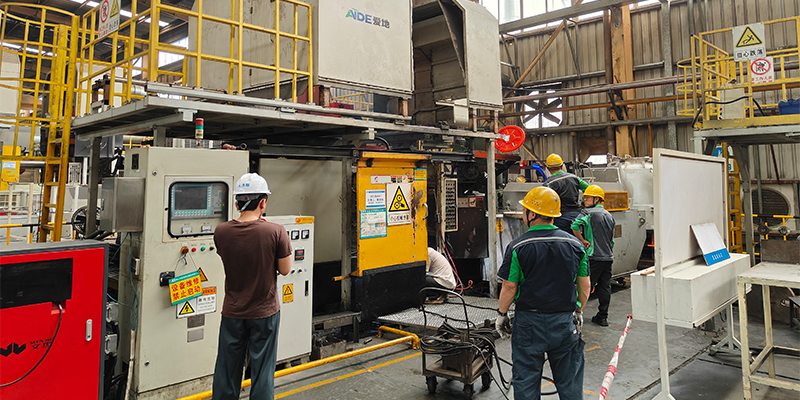
At EMP Tech, my team and I have spent years perfecting our approach to die casting mold design, especially for advanced NEV components. Our success with complex EV motor housings for global Tier 1 and Tier 2 suppliers is a testament to our systematic methodology and deep technical capabilities.
EMP Tech’s Approach to Optimized Mold Solutions for EV Motor Housings
| Key Aspect of EMP Tech’s Delivery | Our Specific Methodologies and Capabilities | How This Optimizes EV Motor Housing Production |
|---|---|---|
| Integrated DFM and Early-Stage Consultation | We engage with clients at the conceptual design phase, offering expert DFM analysis. My team, with backgrounds ranging from mold making to engineering consultancy, collaborates directly with client designers to identify potential manufacturing challenges and propose solutions to optimize the motor housing design for HPDC from the outset. | Reduces the likelihood of costly design revisions post-prototype, ensuring the motor housing is inherently designed for efficient casting of its complex features. This accelerates time-to-market and optimizes cost without compromising on performance attributes like lightweighting or thermal efficiency. |
| Advanced Mold Flow Simulation & Iterative Design | We leverage industry-leading mold flow simulation software (e.g., Magmasoft) to create a "digital twin" of the casting process. We simulate various gating strategies, runner designs, and cooling circuits, iterating until optimal fill patterns, solidification, and minimal defect predictions are achieved. This includes analyzing pressure, temperature, and velocity during injection. | Predicts and mitigates potential defects like porosity, cold shuts, or excessive shrinkage before mold manufacturing. This ensures that the final mold design is validated for producing high-quality motor housings with tight tolerances, superior strength, and critical airtightness in high-volume production. |
| Expert Mold Material Selection & Tooling Design | With our deep metallurgical knowledge, we carefully select the highest quality hot-work tool steels and apply advanced surface treatments (e.g., nitriding, specialized coatings) tailored to the specific demands of the motor housing’s geometry and production volume. Our tooling design incorporates robust construction, efficient ejection mechanisms, and effective venting systems. | Maximizes mold durability and extends its lifespan, crucial for the millions of cycles required by the automotive industry. A well-designed tool reduces maintenance, minimizes downtime, and consistently produces defect-free motor housings with excellent surface finish and dimensional accuracy, even for complicated shapes. |
| Innovative Cooling Circuit Integration | Our expertise allows us to design and implement highly efficient cooling systems within the mold, including conformal cooling channels (where feasible), multi-zone temperature control, and optimized coolant flow paths. This precise thermal management is critical for complex motor housings. | Ensures uniform and rapid solidification of the motor housing, minimizing internal stresses and warpage. This is particularly vital for parts with thin walls and integrated cooling channels, directly contributing to the motor housing’s thermal management capabilities, structural integrity, and overall dimensional stability. |
| Comprehensive Process Optimization & Quality Control | Following mold construction, we combine our profound understanding of die-casting machines and process parameters (injection speed, pressure, temperature profiles) with real-time monitoring and data analysis to fine-tune the casting process. Our IATF 16949-certified quality management system ensures rigorous inspection, including CMM, X-ray, and pressure testing for airtightness. | Guarantees consistent production of high-quality EV motor housings that meet or exceed all customer specifications and industry standards. This level of control translates into minimal scrap rates, reliable mechanical properties, and, most importantly, the assurance that our components contribute to the safety and performance of the end EV product. |
| Customer-Centric Project Management | We provide a single point of contact and maintain open, transparent communication throughout the entire project lifecycle, from initial concept to mass production. Our team acts as an extension of the client’s engineering department, offering proactive problem-solving and rapid response. | Clients experience a seamless development process. Our collaborative approach ensures that their unique requirements for lightweighting, NVH (Noise, Vibration, and Harshness), and thermal performance are met, and often exceeded, efficiently and effectively, accelerating their NEV product cycles. |
Conclusion
Designing die-casting molds for NEV motor housings is complex, requiring expertise in complex geometries, thermal management, and airtightness. EMP Tech addresses these challenges through advanced DFM, simulation, and optimized mold solutions, ensuring lightweight, high-strength, and thermally efficient EV motor housings.


