

Are you wondering if High-Pressure Die Casting (HPDC) is the right manufacturing process for your next product, especially if you need complex, lightweight, or high-volume metal components? Choosing the optimal production method is critical for success.
High-Pressure Die Casting is ideally suited for products requiring high volume production, intricate geometries, thin walls, excellent surface finish, and superior strength-to-weight ratios, particularly for components that benefit from aluminum’s properties in demanding applications across various industries.
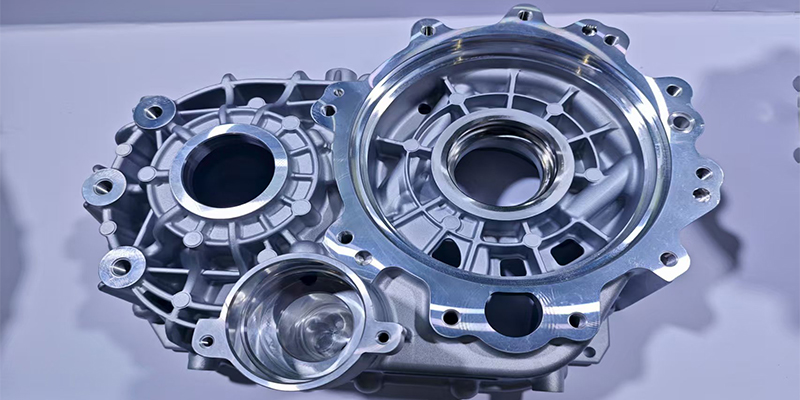
In my two decades of experience in aluminum alloy die casting, I’ve seen a vast array of products come through our doors, each with its unique demands. From the early days working with traditional automotive parts to now focusing heavily on New Energy Vehicles, the common thread for successful HPDC applications has always been the need for precision, complexity, and efficiency at scale. I recall a client who initially considered sand casting for a complex telecommunications housing. Their product required very thin walls for lightweighting, intricate internal features for component mounting and heat sinks, and a smooth external finish for aesthetic appeal. Sand casting couldn’t achieve the thin walls or surface finish, and machining the internal features would have been prohibitively expensive. After our DFM analysis, we steered them towards HPDC. By leveraging HPDC’s capabilities for intricate detail and tight tolerances, we delivered a part that met all their specifications, was significantly lighter, and cost-effective for their high-volume production. This experience clearly illustrated to me, and to them, the range of products for which HPDC is truly the optimal choice.
What are the ideal products for High-Pressure Aluminum Die Casting?
Are you evaluating manufacturing options for components that require a combination of lightweight properties, high strength, design freedom, and high-volume consistency? Not all casting methods can deliver on these exacting demands.
High-Pressure Aluminum Die Casting is ideal for products that demand high dimensional accuracy, superior surface finish, the ability to produce thin-walled sections, integration of multiple features into a single part, and cost-effective mass production, making it suitable for a wide array of sophisticated components.
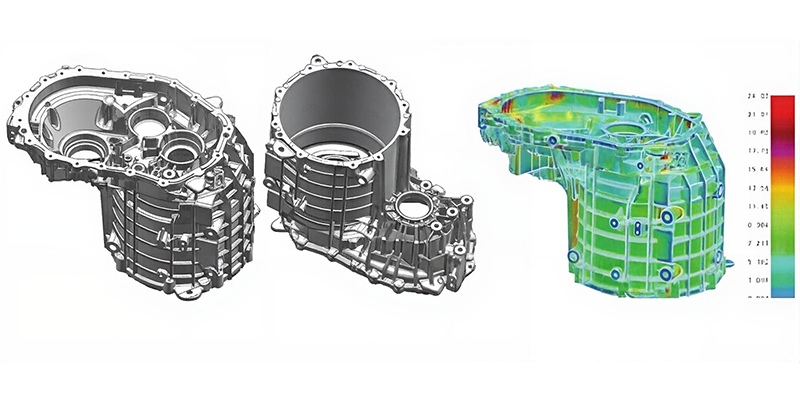
When considering HPDC for a product, there are several key characteristics that make it an ‘ideal fit’. My focus is always on engineering parts that not only meet a client’s immediate needs but also offer long-term value through efficiency and performance.
Characteristics of Ideal HPDC Products
| Characteristic | Description | Why HPDC Excels |
|---|---|---|
| High Production Volume | The product requires hundreds of thousands or even millions of units, making low per-unit cost crucial. | HPDC boasts extremely fast cycle times (often seconds per shot) and long die life, making the initial investment in tooling highly cost-effective when spread across large production runs. The automated nature of the process also reduces labor costs per unit. |
| Complex Geometries & Intricate Details | The product design incorporates complex internal passages, varying wall thicknesses, integrated mounting features, bosses, ribs for reinforcement, or fine surface details. | The high pressure forces molten metal into every crevice of the die cavity, allowing for the precise reproduction of very intricate and complex forms that would be difficult or impossible with other casting methods, or would require extensive, costly machining. This also enables part consolidation, replacing multiple components with a single casting. |
| Tight Dimensional Tolerances | The product requires highly accurate dimensions and close tolerances to ensure proper fit, assembly, or function (e.g., sealing surfaces, bearing seats). | HPDC achieves superior dimensional accuracy and repeatability due to the rigid steel dies and precise control over the injection process. The rapid cooling solidifies the metal quickly, minimizing shrinkage and distortion, thus reducing or eliminating the need for subsequent machining. |
| Excellent Surface Finish | The product needs a smooth, aesthetically pleasing surface finish for appearance, or for functional reasons like reducing friction or enabling thin surface coatings (e.g., anodizing, powder coating). | The molten metal solidifies rapidly against the highly polished steel die surfaces, resulting in a very smooth "as-cast" finish that is superior to most other casting processes. This reduces or eliminates the need for expensive finishing operations, saving time and cost. |
| Thin Wall Sections | The product design calls for thin walls to achieve lightweighting, improve thermal dissipation, or for space constraints without compromising strength. | The high injection pressure and velocity allow the molten aluminum to flow rapidly and fill very thin sections (often less than 1.5mm) before solidification. This capability is critical for lightweighting in aerospace, automotive, and electronics, where strength-to-weight ratio is paramount. |
| High Strength-to-Weight Ratio | The product requires a high strength-to-weight ratio, where a lightweight component must also exhibit significant mechanical strength (e.g., structural components in vehicles). | Aluminum alloys naturally offer a good strength-to-weight ratio. HPDC further enhances this by producing dense castings with fine grain structures, which improves the mechanical properties of the aluminum, making it suitable for load-bearing applications where weight reduction is crucial. |
| Good Electrical/Thermal Conductivity | The product functions as an electrical conductor or requires efficient heat dissipation (e.g., electronics housings, heat sinks, motor housings). | Aluminum is an excellent conductor of both electricity and heat. HPDC can integrate complex cooling fins and channels directly into the part design, maximizing heat transfer efficiency without additional assembly steps. This makes it ideal for managing thermal loads in electronic and power components. |
| Need for Shielding (EMI/RFI) | The product houses sensitive electronics that need protection from electromagnetic interference (EMI) or radio-frequency interference (RFI). | Aluminum die castings, when designed as enclosed housings, naturally act as effective Faraday cages due to the conductivity of aluminum and the continuity of the cast wall, providing inherent shielding for electronic components without the need for additional shielding layers or treatments. |
What are the top applications of High-Pressure Aluminum Die Casting in New Energy Vehicles?
Are you looking to understand how High-Pressure Aluminum Die Casting is specifically revolutionizing the manufacturing of New Energy Vehicle (NEV) components? Its unique capabilities meet the stringent demands of this rapidly evolving industry.
High-Pressure Aluminum Die Casting’s top applications in New Energy Vehicles include structural chassis components, battery enclosures, electric motor housings, inverter and converter housings, and various power electronics enclosures, all benefiting from lightweighting, thermal management, and precision manufacturing.
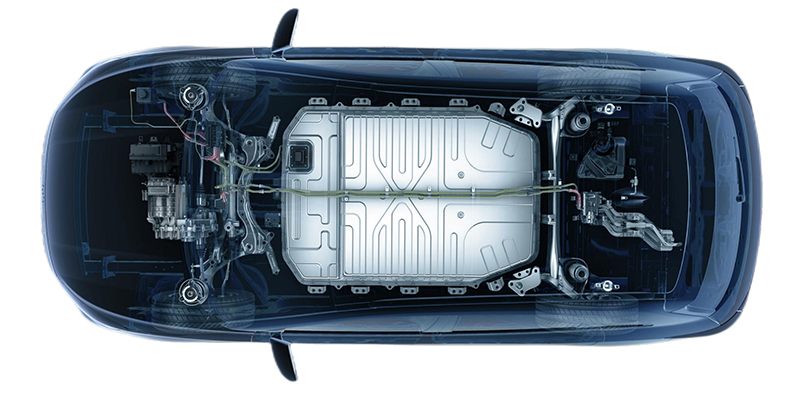
The rise of New Energy Vehicles has created an unprecedented demand for innovative manufacturing solutions. My team and I at EMP Tech have been deeply involved in this transformation, frequently advising Tier 1 and Tier 2 suppliers on leveraging HPDC for their critical NEV components.
Top HPDC Applications in NEVs
| NEV Component Family | Description and Why HPDC is Ideal | Key Benefits (Lightweight, Strength, Thermal, Cost) |
|---|---|---|
| Structural Chassis Components | Large structural castings (e.g., shock towers, suspension mounts, large floor sections, body nodes that connect pillars) are increasingly made using HPDC. These parts require high stiffness, dimensional accuracy, and significant strength to ensure vehicle handling and crashworthiness. | Lightweight: Replaces heavy stamped steel or multiple welded parts, reducing overall vehicle mass for extended range. Strength/Safety: Provides high structural integrity for crash energy absorption and occupant protection; enhances NVH (Noise, Vibration, Harshness) performance. |
| Battery Trays & Enclosures | The battery pack is the heaviest component of an EV. HPDC aluminum is used for the tray that houses the battery cells, often incorporating complex internal structures for cell support, integrated cooling channels, and sealing surfaces for protection against environmental elements. | Lightweight: Dramatically reduces battery housing weight. Thermal: Enables precise integration of cooling channels for optimal battery temperature management, crucial for lifespan and safety. Strength/Safety: High rigidity protects the battery cells from impact and vibrations. |
| Electric Motor Housings | These components enclose the electric motor, providing structural support, facilitating heat dissipation from the motor windings and core, and often include mounting points for other driveline components. | Lightweight: Reduces motor weight, improving overall vehicle efficiency. Thermal: Aluminum’s high thermal conductivity combined with HPDC’s ability to form integrated cooling fins/channels ensures efficient heat removal, maximizing motor performance and lifespan. EMI Shielding: Provides inherent shielding. |
| Inverter & Converter Housings (Power Electronics) | Power electronics, such as inverters (converting DC from battery to AC for motor) and DC-DC converters, generate significant heat and house sensitive electronic components. HPDC aluminum housings provide both protection and efficient thermal management. | Thermal: Essential for dissipating heat from power transistors and circuits, preventing overheating and ensuring reliable operation. EMI Shielding: Forms a Faraday cage, protecting sensitive electronics from electromagnetic interference and ensuring system stability. |
| Transmission/Gearbox Casings | Even in EVs, single or multi-speed transmissions require housings that are lightweight, rigid, and can accurately house gears and bearings. | Lightweight: Contributes to reducing the overall weight of the drivetrain. Precision: High dimensional accuracy ensures proper alignment of gears and bearings, leading to smooth operation and long service life. |
| Brake System Components | Components in the braking system, such as caliper bodies, require high strength, heat dissipation capabilities, and often lightweight properties to reduce unsprung mass. | Lightweight: Reduces unsprung mass for improved handling. Thermal: Aids in dissipating heat generated during braking. Strength: Provides the necessary structural integrity for critical safety components. |
Why does EMP Tech excel in die casting complex components?
Are you challenging the boundaries of traditional manufacturing with component designs that demand intricate details, tight tolerances, and superior material performance? Not all die casters possess the expertise to consistently deliver on such complexity.
EMP Tech excels in die casting complex components due to our two decades of specialized expertise, advanced DFM (Design for Manufacturability) analysis, state-of-the-art mold design, and meticulous process optimization, ensuring both technical feasibility and high-quality production even for the most intricate designs.
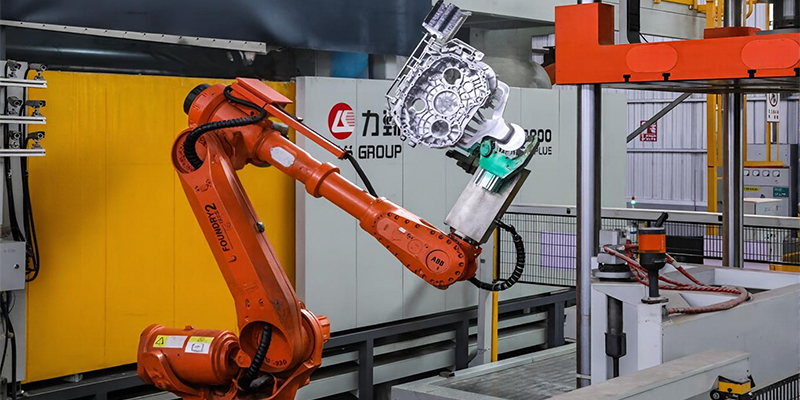
My career at EMP Tech has been largely defined by tackling and successfully overcoming the challenges of casting increasingly complex aluminum components. We don’t shy away from designs that others might deem too difficult. In fact, that’s where we truly differentiate ourselves.
EMP Tech’s Approach to Excelling in Complex Die Casting
| Aspect of Expertise | EMP Tech’s Differentiator | How This Ensures Excellence in Complex Components |
|---|---|---|
| Deep Domain Knowledge (20+ Years) | With over two decades immersed in aluminum alloy die casting, my team and I possess an unparalleled understanding of material science, casting physics, and the specific requirements of various industries, especially automotive. We’ve encountered and solved nearly every type of casting challenge imaginable. | This deep expertise allows us to anticipate potential issues early in the design phase, providing proactive solutions for complex geometries, critical wall thickness variations, and challenging material flow paths, ensuring the feasibility and optimal performance of intricate components. |
| Advanced DFM and Simulation | We don’t just review designs; we integrate our engineering expertise with cutting-edge DFM analysis and sophisticated mold flow simulation software (e.g., MagnaSoft, Flow-3D). This allows us to virtually "cast" the part, identify potential defects like porosity or cold shuts, and optimize gates, runners, and cooling lines before any steel is cut. | This predictive capability is crucial for complex parts. It ensures that the design is fundamentally manufacturable, minimizes costly trial-and-error phases, accelerates mold development, and guarantees that even the most intricate internal features and thin sections will be perfectly filled and solidified without defects. |
| Collaborative Mold Development | Our strategy involves close collaboration with mold designers and often with the client’s engineering team from the outset. We don’t just order molds; we co-develop them, factoring in intricate core pulls, slides, venting, and ejector pin placement, all optimized for the complex part. | This ensures that the mold is perfectly tailored to the component’s complexity, capable of reproducing fine details, achieving tight tolerances, and supporting high-volume production with maximum efficiency and minimum wear, even for multi-cavity tools producing intricate parts. |
| Precision Process Control | Our hands-on experience as front-line workers combined with advanced engineering allows for meticulous control over every HPDC parameter. This includes precise regulation of metal temperature, injection speed and pressure profiles, intensification pressure, and die temperature management, all tailored to the specific alloy and complex geometry. | This rigorous control is essential for consistently producing complex parts with superior microstructure, minimal porosity, excellent mechanical properties, and tight dimensional accuracy, essential for applications requiring features like integrated fluid passages or precise mounting points. |
| Problem-Solving and Innovation | We approach challenges with critical thinking and a commitment to innovation. Whether it’s developing specific post-casting treatments for improved ductility, finding solutions for exceptionally thin-walled structural members, or designing proprietary cooling strategies for integrated heat sinks, our team thrives on pushing boundaries. | Clients tackling highly complex and novel NEV components receive not just a manufacturer but an engineering partner dedicated to finding creative and robust solutions, turning their most ambitious designs into high-quality, manufacturable realities. |
Conclusion
HPDC is ideal for complex, lightweight, high-volume products requiring precision, especially in NEVs for structural, battery, and power electronics components. EMP Tech excels by leveraging deep expertise, DFM, and process optimization to consistently deliver high-quality, complex die-cast solutions.


